 admin
Feb 16, 2026
No Comments
admin
Feb 16, 2026
No Comments
Technology is no longer limited to computer screens and textbooks. Today’s children are growing up in a digital world where understanding how technology works is just as important as knowing how to use it. Early coding education has become a key part of modern learning, helping students develop logical thinking, creativity, and problem-solving skills. One of the most effective ways to introduce these concepts at a young age is through robotic kits for kids.
Making Coding Tangible and Easy to Understand
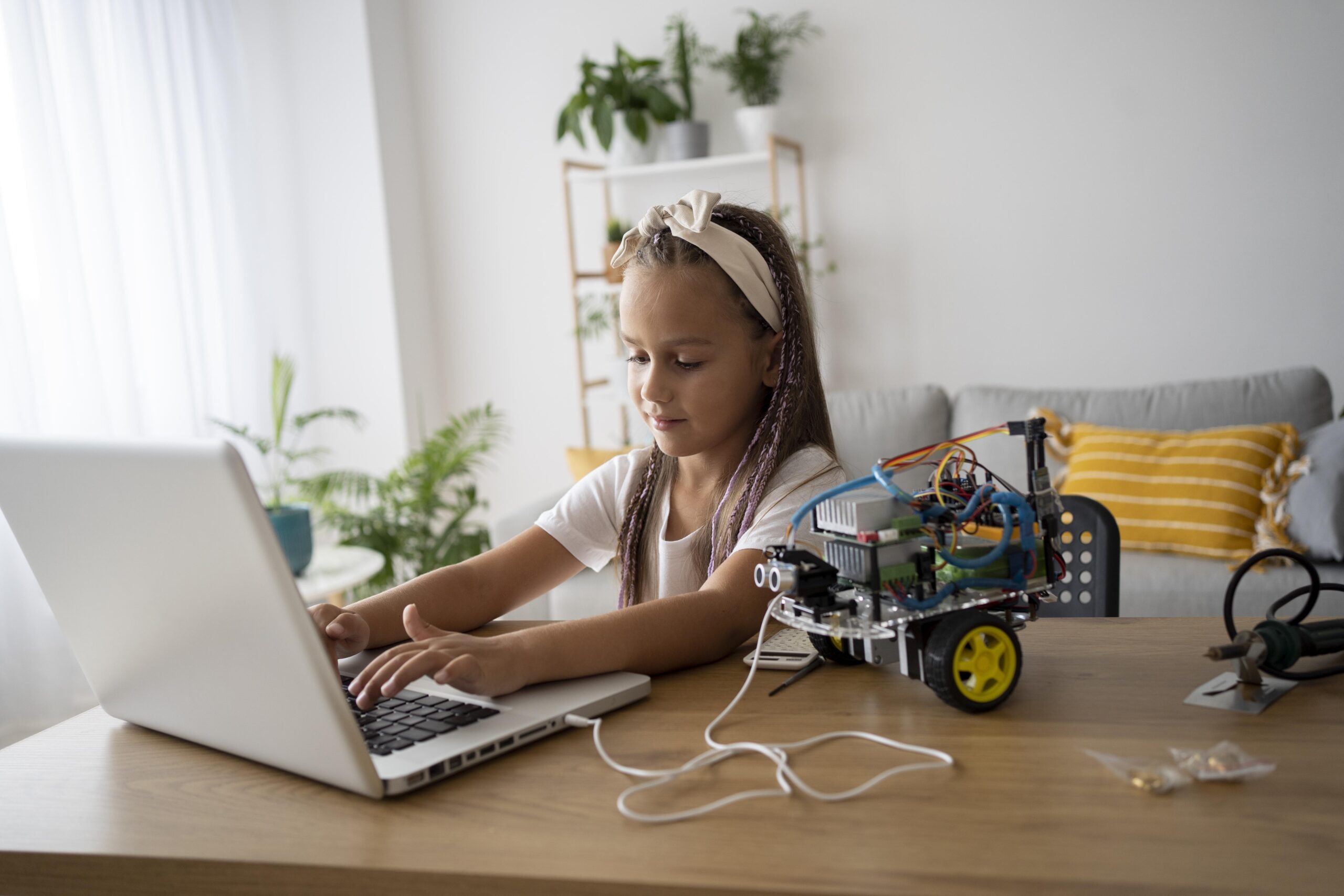
Most children experience coding as an abstract concept when they start learning it. The coding lines on the screen do not show users how their work will produce actual results. Kids can experience interactive learning through robotic kits which transform programming commands into real robotic movements. The connection becomes obvious when a child creates a basic program which makes a robot move forward and turn and display lights and detect environmental signals.
The interactive experience enables children to learn how different actions produce different outcomes. The students quickly understand that each command serves a specific function and all errors can be fixed. The students acquire knowledge through practical experience instead of studying theoretical concepts.
Building Strong Logical Thinking Skills
The foundation of coding exists through its logical structure. Children need to build their cognitive abilities through sequential thinking and planning activities and predicting future results. Children who use robotic kits create their structured thinking patterns. Students need to divide their robot tasks into multiple smaller steps to create their robot solution.
Students need to create a detailed route plan for their robot which will navigate through a basic obstacle course. The team conducts tests on their created instructions to find mistakes which they correct through code modifications. This process teaches two skills analytical thinking and patience. Over time, children become more confident in approaching challenges systematically rather than feeling overwhelmed.
Encouraging Creativity Alongside Technical Skills
The process of coding requires technical skills but it also demands creative thinking. Robotic kits provide children with tools to create models and construct structures while testing various solutions. The process of completing a project requires multiple methods and there exists no single correct approach.
Children can modify their robot’s design, change its speed, or program it to perform unique actions. The combination of engineering and imaginative thinking enables students to experience continuous learning. Creative problem-solving solutions require early exposure to creative work because they establish confidence and promote self-directed thinking.
Supporting Collaboration and Communication
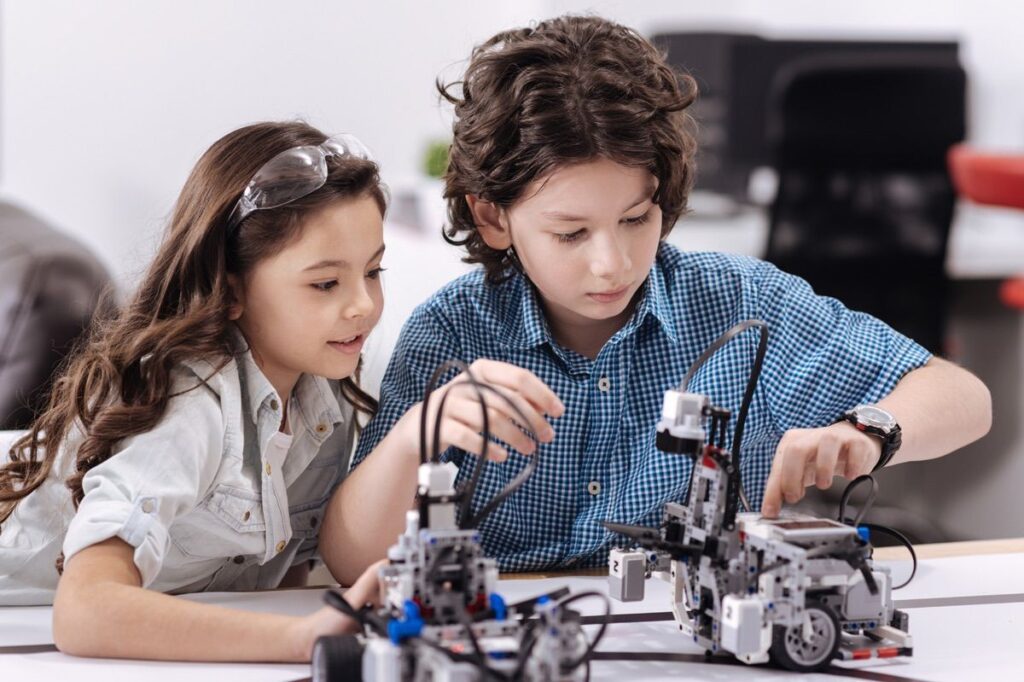
Early coding education is not only about individual skill development. In many classrooms, children work in teams when using robotics kits. They share ideas, divide responsibilities, and solve problems together.
One child might focus on building the robot, while another handles the coding. Through collaboration, students learn to communicate clearly and respect different perspectives. These teamwork skills are valuable far beyond the classroom. They prepare children for real-world environments where cooperation and communication are essential.
Introducing Core STEM Concepts
The robotic kits for kids provide more than coding instruction since they teach fundamental science technology engineering and mathematics concepts through their integrated design.
Children learn motor operation and sensor light detection and simple machine movement through their exploration activities. The students use mathematical concepts to measure distances and control their speed. The process of building stable structures requires the application of engineering principles.
The integrated learning approach links all STEM subjects through its educational design. Students begin to see how different subjects work together in practical applications.
Developing Persistence and Problem-Solving Skills
Robotics teaches children their most important lesson about developing persistence. Programs do not achieve perfect operation during their initial test run. Robots experience movement failures, sensors produce inaccurate readings, and operators must modify their commands.
Children should not give up their work because they experience obstacles. The process of testing and correcting errors teaches people how to develop resilience. They discover that educational mistakes will happen and their progress depends on their willingness to work.
Children develop problem-solving skills that apply to both coding and other activities. Children begin applying the same mindset to academic tasks and everyday challenges.
Age-Appropriate Learning Pathways
Modern robotic kits are designed to suit different age groups. Younger children may start with simple drag-and-drop coding platforms that introduce basic sequencing. The students will progress to learning advanced programming concepts which include loops and conditionals and sensors when they achieve higher levels of confidence.
The gradual progression method helps students by showing them progress because they will experience neither excessive difficulties nor complete lack of challenges. Early exposure builds a strong foundation that can later support more advanced studies in computer science and engineering.
Preparing Children for a Digital Future
The world experiences fast changes because of automation and artificial intelligence and smart technologies. The introduction of coding instruction at an early age enables children to learn about the technological systems that will control their upcoming years.
Kids can use robotic kits that offer them a structured learning experience which enables them to become digital experts. Children transform from being technology users to becoming their own creators and inventors. They learn how devices operate and how software programs control hardware components.
The children develop confidence through their initial experience which drives their interest toward technology-based jobs. The logical thinking and creative skills that children develop through robotics activities will benefit them throughout their entire lives, regardless of whether they choose to work in technology jobs.
Creating Engaging Learning Environments
Traditional teaching methods rely on lectures and written exercises as their primary teaching methods. The combination of these two teaching methods with practical activities leads to higher student engagement. Robotics sessions create excitement in classrooms.
Students look forward to hands-on projects where they can experiment and see immediate results. This enthusiasm improves participation and motivation. When children enjoy learning, they absorb concepts more effectively.
A Step Toward Meaningful Education
Early coding education should not feel complicated or intimidating. The proper tools make learning activities become enjoyable and accessible. Robotic kits for kids serve as a bridge between curiosity and structured learning. The tools help people understand complex concepts through visual demonstration while users can explore the system to develop fundamental abilities.
Structured robotics solutions provide schools and learning centers with effective resources to enhance their early coding programs. STEM Lab develops educational resources and provides hands-on learning assistance to help schools build interactive spaces where young students can freely learn coding and creative thinking.